Tuesday, May 29, 2012

Dreaming and Taking Risks Leads to Inventions!

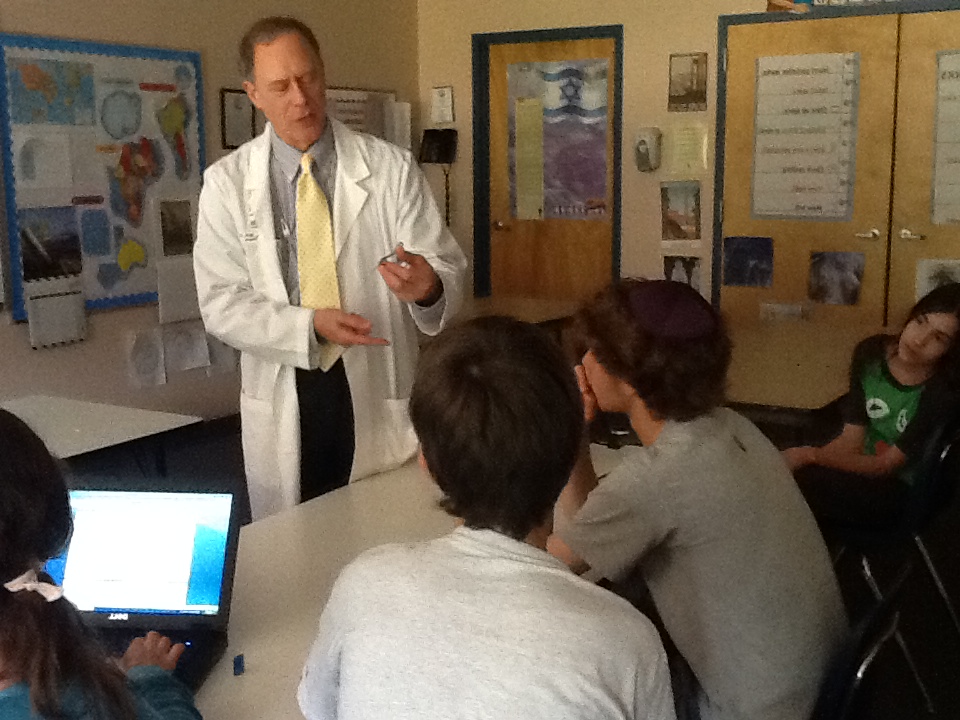
Shiri Koren is today's blogger for guest teacher Dr. Eric Kraus.


Soar:  Innovation Education And Entrepreneurship Institute.
Dr. Eric M. Kraus
The Ear Center of Greensboro
Today on the 25th of May, Dr. Kraus is here to lecture us on his profession, and how he got in that position. Besides being a doctor, he is also an inventor. He is an ear, nose, and throat surgeon, but lately he has only been focusing on the ear.
Entrepreneurship
You have to be a dreamer; day dreaming is pretty healthy to be shifting through thoughts.  You have to have passion; it takes a lot of time and patience. You have to take risks. Know your advantages, know your struggles. You also need to balance your time. You cannot save time. Spend your time wisely.  
His opinion on the five important S’s of life
Surgery wants to make a difference. Also, it is his occupation. Networking and finding jobs is done through friends and family.
Swarthmore is where Dr. Kraus went to college. Education is where you learn to problem-solve, analyze and evaluate. He wants to get as many degrees as possible. It will open more doors for you. Complete your education. Read a lot. It helps you become a better writer and a better communicator. All of those things help you.
Spouse: one of the biggest decisions in your life. It determines your lifestyle and your children. Family is very important.
The other three: synagogue, Steelers, and sleep. To take care of your body keeps you healthy. Sleeping is a creative time period.
His Story
Dr. Kraus grew up in Pennsylvania and went to Swarthmore College and the University of Pittsburgh School of Medicine.
He has an MD Degree. He owns his own practice.
He performs surgery every day and does researching and teaching.
Inventions and Patents (Most of his inventions are worldwide)
FindMeID Bracelet: to help identify special needs kids.
Kraus Modified Schuring Ossicle-Cup Prosthesis 92
Middle ear implant mounting bracket
Kraus K-Helix prostheses, issued Nov. 2011
Types of Patents and Trademarks
-Utility- a real patent, but the hardest one to get.  It is the most cherished in the world. It has to be a new idea, attainable, useful, and “non-obvious”.
-Design- worthless; it is easy to receive.
Patents- an exclusive right officially granted by a government to an inventor to make or sell an invention. A patent is only used for twenty years. After that, it then disappears.
FDA Food and Drug Administration: a government group (very knowledgeable)
Dr. Kraus worked on the process of creating his invention for 25 years.
He got a 510K Application, file patent. It took about 3.5 years to process (to get approval for each material needed for his invention).  If done another way, this would cost millions of dollars. He needed to get a license and get approval from a private workgroup. Then, there was a clinical research study. He had to demonstrate the procedure to make it safe for humans. Then, after some other steps, the item was approved.

  • He told us that being an Inventor is a curse. You don’t know where to stop.
  • Once you have knowledge, you can be powerful.
  • Failure can teach you a lot.
  • You cannot buy knowledge.
  • “Imagination is more important than knowledge” is a quote from Albert Einstein.
  • See the world outside of what you know.
  • Volunteer and shadow people.
  • Connect the dots differently.
  • Strive for balance.
  • Invest in yourself right now. And network with everyone.
  • Use Spell Check!

Friday, May 25, 2012

Dr. David Altman Teaches Leadership

Aliza Owen is today's blogger.


Leadership

We are listening to David Altman speak to us about creative leadership.
We are looking at images and picking out the aspects of leadership within them. Independence, courage, helping others, and hard work are only a few of the characteristics that were plucked from the pictures. The pictures do not necessarily show well-known leaders in them, but images of everyday people and things that can be interpreted as the symbol of a leader. This first activity is showing that you can find a leader’s characteristics in everyone or everything.
Next, we are discussing what makes someone a leader. Is every Rabbi a leader for simply being a Rabbi, or do they need to have a certain way about them that makes them a leader? Not every person was born a leader, but they can become one if they live up to the characteristics that belong to a leader; or maybe they were not destined to ever be a leader. A leader cannot have too much power, either, or they may overpower another and become evil with power.


Now, we pick up cards with quotes on them that describe our perspectives on what a leader does. From going and fighting for what they want to accomplish, to finding the adventure within, all of these quotes show us that a leader does not simply sit around and wait for someone else to do something they wanted to happen; they take action and do things themselves.
            Lastly, we were given cards with characteristics and were told to put them in order of which we always, often, sometimes, seldom, and never value. We arranged our “always” columns onto one table and looked for similarities. Some of the words that came up the most were freedom, wisdom, family, justice, and love; but the words spirituality, adventure, and responsibility were used sparingly. This shows that not all of us are the same, but we also do value similar things.

Wednesday, May 23, 2012

Maddy's post: Aaron Strasser and Lucky's

Maddy is today's blogger, as the eighth grade continues to learn about successful Greensboro entrepreneurs.


Lucky’s Pet Resort and Day Spa
Aaron Strasser owns Lucky’s Pet Resort and Day Spa with his brother. For high School, he went to Greensboro Day School in 1995. He graduated from Tufts University in 1999. Lucky’s Pet Resort is a high-end pet hotel and spa. Pets can stay as long as a month. He says customer care is important because he wants to make sure the pets are all cared for at Lucky’s Pet Resort and Day Spa. He talked about a business plan, which is a way of planning a successful business.
            We talked about how to advertise for a new business. He says that he did a huge grand opening for his business. It got a lot of media. We talked about the two differences of advertisement, which are earned media and paid media. Earned media is publicity that is not paid for. Paid media is publicity that is paid for. A lot of businesses try to use plenty of earned media.
He showed us some of his commercials and explained how he made a good advertisement. He says that when a business runs a commercial, the content does not matter as much as the company logo being noticeable. He told us the challenges of running a business are human resources, customer care, and administrative. He told us what ideas made his business successful. They are customer loyalty, animal safety, and role in the community. He taught us a lot of fascinating and important information on how to run a successful business like his.

Tuesday, May 22, 2012

SOAR 2012 - Koby Ellick Blogs!

SOAR (8th Entrepreneurship and Leadership) began yesterday with a presentation by Dr. Mark Hyman, a Greensboro family dentist.  Dr. Hyman's three children are BSDS alumni. He is a member of the Board of Governors and coached basketball at B'nai Shalom for over nine years.  Koby Ellick is today's eighth grade blogger. Attached are his notes!


Dental with Dr. Hyman
  • What it takes to have a profession- there is a whole background
  • He went to Grimsley
  • When you become a dentist you can become a dentist in many places-army, gov.,
  • He says it is very important to reserve a domain name on the internet and to have ads and what not.
  • There is a beauty of being your own boss – you make your own hours and you make your own wages
  • The quality of your life is dependent on your nutrition.
  • Using modern technology like the snap on smile, or the precision attachment dentures helps the elderly live a longer and happier lifestyle.
  • Instead of using metal or gold in fillings today, they use a plastic liquid that is just inserted and they quickly solidified.
  • A career in the healthcare field is a ton of fun, but also owning your own practice requires you to be a businessman at the same time
  • It has been said in business that you can sell to anyone, but a repeated seller makes the profit.
  • Your patients don’t care how much you know till they know how much you care --Dr. Hyman
  • Three magic words: Success leaves clues.
  • Carly- Talk to people, physicians, lawyers, go to courses, listen to audio books about everyday situations to help understand a business
  • You have to talk to the best and positive people
  • There is a book on Dale Carnegie called how to win friends and influence people and a bunch of other positive books.
  • Discretionary parts of the healthcare are going to thrive.
  • Role models are huge
  • No life without passion

Tuesday, February 15, 2011

Noah Kaplan Blogs..."Learning about Law"

In the first minutes of the lesson Steve Friedland, our special guest, told us to imagine that we were all lawyers. He gave us some situations of crimes. He told us that he used to be a prosecutor. He then told us about a man that video taped his speedometer, put it on YouTube, was then caught and the tape was used against him as evidence. he then told us what a crime was. He said that in some cases killing somebody is not a crime. He then told us that a tort is. He told us that we would be in a " trial." He then gave us an example and we started the trial. In the beginning of the trail we learned words such as "battery" and "assault."

We were taught about the people that take part of the trial, such as the witness, the prosecutors, and the defendant. You then need to swear in that you will tell the truth. The prosecutor then asks a lot of questions, and shows evidence to the witness. The defense council also asks questions to re-exam, and try to help the witness to try to the defendant. The judge then makes sure that everything is in order. The prosecutor also gets a chance to cross examine the situation. The defendant was then called to the stand. He got quite tripped up and made a lot of mistakes. The victim did not agree with the defendant whatsoever. The eighth grade learned a lot about the court room. It was a very interesting experience for all of them, and a very fun scenario, to act out.

Noah Kaplan, BSDS '11

Tuesday, February 1, 2011

Caffeine and Alcohol - Not for Our Leaders!

Dr. Tannenbaum began today's session with a pre-test to determine what the eighth graders knew about caffeine.


How many people drank a soda this week? Four students answered "yes." We learned that Coca Cola was invented by a pharmacist and originally contained a little cocaine - thus the name. It turns out that this area of the country consumes more sodas than other.


Two potential beneficial health effects of caffeine: Energizing, more alert, less drowsy, increases adrenaline (impact on athletics and performance?)

Two potential dangerous side effects: Stimulants go up and down, makes you more alert and nerves work faster; it also elevates mood. Increases heart rate and basal metabolic rate. This can give you palpitations, arrhythmia, urination. It makes you urinate more frequently and increase your stomach acid.

Most to least caffeine: Some caffeinated drinks have more than others. Some drinks, such as Monster, Spike Shooter, Red Bull and Redline, have an extremely high amount of caffeine.


Guarana, a plant from Brazil, has 2.5x the amount of caffeine as coffee. This appears in energy drinks, sometimes with other stimulants.

Side effect of mixing alcohol and caffeine:


Caffeine is used by 90% of the world population. ThCheck Spellinge recommended maximum for 5th-6th graders is 50 mg. a day. Sources include coffee, tea, sodas, chocolate, medicines.


Caffeine dependency is a problem. It causes anxiety, nervousness, insomnia and other side effects. Decaffeinated coffee is achieved through various methods, including water, ethyl acetate, CO2 and Methyl Chloride.


Caffeinated alcohol drinks, such as Four Loco, has high caffeine and alcohol + to 6 beers plus 5 colas. Blood alcohol reaches two times the national intoxication standard and alcohol poisoning, nausea, vomiting and cardiac arrhythmia may result.


Environment and genetic predisposition contribute to addiction.


Dr. Tannenbaum reviewed his pre-test at the end to make sure students understood the points he made in his presentation. The kids looked at the cans to see what was sold. At the end of the session, students pondered situations they might encounter in high school and how to deal with them for themselves and their friends. Thanks to Dr. T. for a very informative session!

Tuesday, January 25, 2011

Jewish Leadership


Marilyn Chandler, Executive Director of the Greensboro Jewish Federation, was today's SOAR speaker. "What does it mean to be a leader?" was her opening question to eighth grade students, followed by definitions of Jewish leadership to be discussed in "chevruta" - with a partner. First, students shared their definitions of leadership:

Sergey: To guide people by making rational decisions on what to do

Celia: To be strong and passionate

Jordan: To have innovative ideas that are beneficial to people

Sydney: To be brave and courageous (to take risks and not be afraid)

Marilyn summarized: "Someone who guides people to make decisions that are sometimes risky, requiring bravery and courage and possibly fighting against the mainstream - someone who can influence others."

The class generated a list of Jewish leaders: Moses, Golda Meir, Lou Reid, Fran Drescher, my mom, Herzl, my parents, teachers, head of school, Ben Gurion, and rabbis. Personal connections and guidance as well as bravery were the main reasons students made their choices.

The Hebrew root nun-hey-gimmel is the "shoresh" for "minhag" - custom, or practice - and "manheeg," which means leader. Leadership, said Marilyn, is the way we behave - what we do in a particular role.

Next, students worked on characteristics that describe a Jewish leader:

Celia: Someone who is active in the Jewish community, someone who attends services, helps to make decisions, serves on different boards, volunteers for different things

Liz: Someone who is pro-Israel, who does fundraisers and goes to AIPAC (American Israel Public Affairs Committee - a lobby group)

Jordan: Add Jewish values and philosophy to our general definition of leadership.

Marilyn talked about being Jewishly literate and knowledgeable, in order to operate as a leader in a Jewish context. Finding a mentor to learn about active Jewish leadership is a good idea, she said. Liz suggested that studying Torah would be a good idea. "Constant learning is critical for Jewish leadership," concurred Marilyn. She asked the students to consider the relationship of money to Jewish leadership. As an example, she cited the duffel bags that Greensboro Jewish community sends every year to the Moldova Jewish community.

Next, students studied the difference between lay leaders and professional leaders. Lay leaders are volunteers and professionals are paid. Both make an impact on the community. Do they add value in different ways to an organization? Liz offered that lay leaders added value by being part of the decision making on boards. Sydney said volunteers add value by their choice to volunteer, showing care for the organization. Both the lay and professional leaders have passion for their work, said Marilyn.

Marilyn differentiated between lay and professional leaders. Lay/volunteers are usually board members, committee members and professionals are "staff." Boards are responsible for making policy; the professional informs the board and implements policy decisions. Board members are also ambassadors to the community after a decision is made. Several examples were discussed in order to help students understand the different roles of board members and professionals.

The class put together a list of Jewish professionals: youth leaders, rabbis, teachers, Hillel directors, camp directors, cantors bar mitzvah tutors, shlichim.

As the time flew by, Marilyn touched on a number of other topics connected to Jewish leadership.
Students learned the difference between "for profit," "not-for-profit" and NGO organizations.

Marilyn also explained the role of the GJF in taking care of Jewish communities in the Diaspora and in Israel. She also discussed mitzvot such as bikur cholim that shape Jewish leadership roles. "Kol Yisrael Areyvim Zeh lazeh" - community responsibility - and tikkun olam is a key mitzvah shaping the work of the federation.

To sum up the session, the eighth grade supplied their ideas for a B'nai Shalom mission:

Celia: To make better Jews who can make better decisions

Zippy: Make Jewish leaders of tomorrow

Jordan: Create open minds

To learn about Judaism and secular studies.

Each student completed the sentence, "Continuing my Jewish journey I will:
  • learn
  • will be part of Jewish youth groups
  • will go to Temple and read Torah
  • always learn something new about Judaism
  • will be a role model to others
  • will help others and think about Jewish values
  • will be a Jewish leader
  • will help others
  • will go to services and try to help the Jewish community
  • set an example.


Tuesday, January 18, 2011

How does personality affect leadership style?


Johan Naude of the Center for Creative Leadership joined Kitah Chet as today's SOAR guest speaker. He started by asking students to name objects in the room from A to Z. As the alphabet progressed, student responses became more creative. Eli wrote an "x" on a piece of paper to fulfill the X category and the first to notice the randomness of the responses. Liz noticed that everyone cooperated in coming up with answers. Johan emphasized the diversity in the types of answers students came up with. If everyone had the same approach, he asked, would the exercise have been longer?

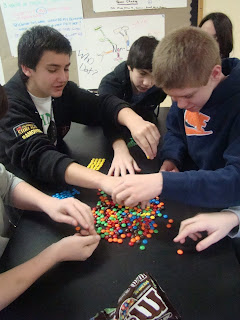
Earlier this morning, students completed a Myers-Briggs survey. Students briefly discussed the survey with Johan, trying to determine the purpose of the exercise. Before answering, Johan divided the students into two groups (based on the results of the survey, but the kids did not know that!). Students were charged with building a house with M and M's. One group built a very organized house, with students working together to plan colors and tactics. The other group called this house "clean, traditional and organized." The second group pointed out the "face" of the house, with windows acting as eyes, nose and mouth. The other group described this house as "cool." Each group appreciated the other's (very different) representation. They began to extrapolate characteristics of each group. Using an MBTI preferences sheet, students examined definitions of various preferences, particularly "judging" versus "perceiving." They quickly realized which group tended towards J (judging) and which towards P (perceiving).


Students were then asked to think about how their preferences played out at school and at home. Johan emphasized that there was no right or wrong, but that different approaches would be effective in different situations. Eli pointed out that in doing projects, a more organized approach was beneficial. Johan mentioned that in certain situations, you may want to use your natural preferences, but that in others, you may need to expend energy to do something different. Jordan said that this was helpful to know in understanding why it might be easy to procrastinate and put off work.


After studying the key to MBTI preferences, students attempted to mark their choices and then compared them to their test results. Several were quite accurate in predicting their MBTI choices - a marked change from last year, when students roared with laughter as Johan shared their preferences!

Tuesday, January 4, 2011

Turning Ideas into Products


Innovative ideas, new products and return on investments...it all starts with an idea, said Michael Kaplan, engineer - and today's guest speaker for SOAR. Using a simple soap dispenser as an example, students contemplated all the parts needed to put together a new invention.

Michael asked if anyone had ever had an idea for a product to invent, noting that very little of what students saw around them was invented without engineering.

"Engineering and invention are intimately connected," Michael pointed out to the eighth graders.
"Necessity is the mother of invention," he noted. Maxx said, "If you feel like you need something, you invent it." Sergey added, "If you're going to sell it for a million a day, you have to make sure it's something people want."

When customers come to see Michael at ABCO, he wants to make sure that his product can improve quality, save time and save labor. One way to save labor, he said, was to improve technology. A few manufacturing slides were used to illustrate his points. Examples included a compact case, deodorant container, a toothpaste tube.

Turning ideas into functional and manufacture-able products is Michael's definition of engineering. The products have to work, he pointed out. You want to make sure that you have not violating a previous patent. It must be possible to put the product together with existing technology, and the process must be cost-effective and safe for the consumer and the manufacturer.

Students gave examples of dangerous industries: coal mining, fishing. Michael spoke about the ethical implications in making decisions what to produce.

Quality control must be consistent and supply and demand must be balance in order for the product to be successful. If a company does not produce enough, the customer will be upset - even though demand on many products is cyclical. Michael used freeze pops as an example. Freeze pops are made in January and stored so that they may keep up with the high summer demand beginning in May - a good example of supply and demand balance.

Money, cost, labor costs, time costs, size, speed are constraints in making a product, noted the students. Michael was amazed that students came up with all of his points!

"Time to market" - the sooner one can get the product to market, the sooner it can be sold, said Michael. This was an important concept for students to absorb. He further explained some of the upfront investments before a product is created and then produced.

Michael asked if there was anything unsafe in the room. Using the door as an example, he noted that one can walk into a door, pinch fingers in the hinges or in the doorway. We accept the inherent dangers of doors because the alternatives are not acceptable for aesthetic or cost reasons or practicality. Known hazards are acceptable, because we know how to handle them. Are doors a dangerous product, he queried - or is a door a compromise product. Child-proof containers are another example of a compromise. ABCO discusses these issues all the time when making its products. Time, material and safety are all issues considered in compromises.

Design-Build-Test is a loop his company uses. They start with a concept and then use a computer program to draw it up and model it. Next, they build it, which costs a great deal in labor and materials. The last stage is to test the product, and redesign, rebuild and retest until the product works.

In the design phase, designs are put on paper: hand sketches, CAD/CAM software, programing software. A concept is developed and problems are identified and refined (risk assessment), and feasibility is checked. They concentrate on the hardest part of the project first.

Students handled the inner parts of a soap dispenser to try to come up with the information they might need to produce the product. They came up with questions they might ask a potential customer, including how the products will be packed and shipped, how many parts per minute can be made, how will incoming materials be supplied, what variations of parts are acceptable, what chemicals are being handled. They discussed processes required for assembly, determination of quality, delivery, floor space required for machinery, budget constraints, time constraints, preferred suppliers of components. After students handled the soap dispenser parts, Michael showed them videos of the first trials of producing them - including mistakes made.

In the test phrase, engineers compare the function of finished products to the original goals. Redesign and rebuilding may be required, as well as determining areas of required improvement, whether they be manufacturing efficiency, purchased component selection or additional functionality. A discussion of patents and legal ownership of ideas (intellectual property) ensued. "You can't patent it unless you're the owner," said Michael. Who owns the design may depend on how a contract is written. That's why people keep invention journals and protect their inventions. To own a patent, one must create the product with one's own resources. If a product already exists, a patent search may be required. Patents clearly establish legal ownership, establish professional reputations and allows for temporary "cornering of the market" said Michael, It is, however, an expensive process and requires public disclosure, allowing companies to find "work arounds."

Jordan asked what would happen if the design-build-test loop did not work after several iterations. He explained that the answer often depended on budget and time. She and Celia suggested a new product: caffeinated gum. No spills, no mess...Michael suggested to figure out on your own how to take the product to market in a small batch. Make enough to sell at the next Israel trip fundraiser and sell it locally. While you are doing that, he said, keep notes, a video diary, and have witnesses to your design notebook. By bringing the product to market, you have documentation for your use if you choose to patent - or sell it to a company.

I could see the students buzzing about potential products as they left the session. Thanks to Michael for putting the gears in motion!

Tuesday, December 21, 2010

SOAR Continues - Year II - Leadership


SOAR began its second year with a terrific presentation on December 7 by Dr. Mark Hyman. Eighth graders learned how to handle a dentist's drill and each child held a drill and drilled one tooth. Discussions centered around developing a business model for running a health care business.

Today's program was taught by Dr. David Altman, Vice President of Research and Development at the Center for Creative Leadership in Greensboro. Dave opened the session with a "self-awareness test" where students were asked to count basketball passes they saw on a video clip. The class was astonished that each child missed the moon-walking bear in the video, and so the message was that "it's easy to miss something you are not looking for" came across very clearly.

Dave asked students to rate their leadership capability now and in the future. A greater percentage of the class gave themselves high ratings for leadership in future years. Several activities followed, where the kids chose cards and described positive and negative examples of effective leadership ideas. Zippy said that a "top dog" took what he should share. Noah chose "not my problem," explaining that leaders have to take responsibility for their actions.

"When you think about being a leader...which quote speaks to you?" was Dave's next question, as he herded the eighth graders to a table full of pithy quotations about leadership.

Haddas said, "You need to know what you're doing, not just think about it," explaining why she chose her quote.
Sydney added, "You have to learn about things; you're not just born with leadership."
Zippy noted, "To be a good leader, you have to have an adventurous side and a serious side."
Celia spoke carefully, "When you do something you enjoy with people you enjoy, you're a more effective leader."
Eli pondered, and said, "Everybody has a path; you just have to follow it."
Sergey: If you are what you do best, and if you are good, so be it. If you are not very good, do not strive to be what you are not."
Noah commented, "I always feel like I'm in tune, go out there and do what I'm going to do - so don't waste a day."

After photographs, metaphors and quotes, Dave introduced a new fragrance test, asking students to pick one candle and reflect on insight it evokes. "How does it relate to leadership?" he asked the students.

Haddas thought her smell prompted peacefulness, calm and uniqueness. Sydney talked about calm and being openminded. Comfortable, homelike and relaxing, were sense Zippy felt from her scented candle. "Strong yet calm" was Celia's description. "You reap what you sow," was Eli's comment on leadership - emanating from a fruit scent. "I implement what I know to describe this smell - a normal rainy day." said Sergey. "You have to be confident to be a leader," said Noah. "It smells like nature," said Maxx.

"Write a six word short story," said Dave, citing the six word short story by Ernest Hemingway: "For sale. Baby shoes. Never worn." He asked students to base the short story on the metaphors, quotes and pictures they collected, thinking about a leadership philosophy. A selection of the "short stories" appears below.

Sergey's story: There is no going back now.
Celia: Be strong,yet careful. No giving up.
Zippy: Be a good leader, you'll help.
Sydney: Helping hands are how to succeed.
Eli: First prove, then achieve, finally inspire.
Noah: To be a leader, must grow.

Final words from Maxx - which neatly sum up the session: "Trees can sprout through land uncultivated."

Friday, March 26, 2010

Summary and Conclusion of SOAR


Samuel said "You have to be confident and have initiative." These words summarized his leadership learning experience through SOAR. Today, students also discussed extroverts and introverts, judgment versus perception, and reviewed a variety of issues brought forth in the leadership series.


To sum up, Susan emphasized that everyone does things differently and that what seems natural to one person may be approached differently by someone else. Good leaders, she said, are not judgmental. Students gave Susan some feedback on the questions that were asked in their leadership journals. Evan said, "You always feel the same when you go by your values and when you do not." Jessie said that it was easy to answer what she learned from each day's class, but that the questions about living by your values were more difficult for her. Matt suggested doing the values clarification exercise a second time after several additional sessions. "A good leader will ask for feedback," said Susan.

Students watched "Celebrate What's Right With the World." Susan said that one of her favorite types of leadership is servant leadership, where the leader brings out the best in everyone else. At the end of your B'nai Shalom career, she said, "Your world is full of possibilities and you can celebrate what is right with your world."

Susan asked each student come up with a personal goal for leadership development, listing two strengths, and the two things that are areas for growth, noting one goal of to accomplish by April 30.

Some of the goals students shared:
Zach: "Speak up more."
Matt: "Use my talking skills at better times."
Kendall: "Keep an open mind more often."
Jessie: "Be more non-judgmental about people. "

At the end of the session, students evaluated the leadership portion of SOAR. A summary will be posted in April.

Tuesday, March 23, 2010

Vision


David Altman, president of the Board of Trustees, was today's guest speaker. He got the students' attention right away by recounting how he challenged a member of the Class of '06 to run up the steep snake path of Masada at 4:30 AM during the 8th grade Israel trip. Unfortunately for the proud students, David won the race! His challenge to this class was "Articulate your own vision for leadership!"

In order to wake everyone up and get the brain gears moving, Dave shared some definitions for leadership from Daniel Gilbert, Henry Ford, Greg Mortenson and Mohammed Yunus, a Nobel Peace Prize winner from Bangladesh. Humans, unlike any other animal, can think of the future, said Gilbert. Ford, on the other hand, had a vision of replacing horses with a motorized device - the car. Yunus was an economist with a vision to end poverty by starting a bank to loan money to poor women to start business. Students were familialr with Greg Mortenson, a climber trying to climb up K2; his vision was that poor girls in Pakistan could be educated if there were schools for them. Mortenson connected with the local villagers and so his schools were not destroyed by the Taliban.

After giving a few examples of people with well-defined visions, Dave turned to Martin Luther King Jr. and his dream - or vision. Students watched a clip of MLK's famous speech, identifying key phrases that made it "stick" such as "I have a dream" and "free at last, free at last." Students sorted through stacks of famous phrases, choosing and sharing those that were meaningful to them. This gave them some ideas about the power of a few well-chosen words and phrases.

Next, Dave showed the "Lost Generation" clip in which phrases are read forward (negative impact) and backwards (positive impact). "Words make a difference," he said, "reversing them changes their meaning." As an example, he shared the web site wordle.net. Wordle makes word clouds, (graphic pictures) with words. The size of a word is a representation of how many times the word occurs. In the mission of B'nai Shalom, the words "Jewish" and "students" are most prominent, followed by "academic" and "community."

Dave distributed quotes and asked students to explain what they liked about them in terms of vision. He told the story of Hemingway, who wrote a short story in six words: "For sale baby shoes never worn," and shared the slogan for Navy Seals: "Slow is smooth. Smooth is fast. " Students discussed various interpretations of the two "short stories before writing six words each that summarize/epitomize their visions for their own leadership in the years to come.

A few "short stories" of their visions are noted below:
"Always keep taking on new challenges." (Chase)
"To the future we all go." (Russell)
"Life is a mission. What to do?" (Dima)
"Keep trying. You'll be successful." (Matt)
"If failure, assess and reattempt situation." (Jessie)
"Be yourself, no one else can." (Kendall)
"Work hard, have fun, breathe air." (Jake)
"Use what you learn. Make mistakes." (Jennie)
"Live carefully, choose carefully, live good." (Evan S.)
"Think outside the box, or else." (Evan B.)
"Who am I? I don't know." (Micah)
"Learners always have an open mind." (Zach)

Tuesday, March 16, 2010

Giving and Receiving Feedback


Do people trust more what you say - or what you do? This was the provocative question with which Dr. Renn began today's session. Dr Renn told the eighth graders, "What people want to see in you is what you do. Behavior is what people watch and determines what you really believe. When you are inconsistent in what you say and what you do, trust issues develop. Your behavior leaves a lasting impression."

As the students contemplated his words, Mike asked, "How can we help ourselves and others understand our own behavior? Feedback in school includes grades (information on how you did) and teacher comments. You get feedback all day long in school and also from parents at home. This feedback may be positive or negative. Friends give feedback as well and can be the most difficult to deal with. To give and receive feedback, you need will and skill." "You have to have the courage to speak up and tell them," said Kendall. "It takes courage to give and to receive feedback," said Dr. Renn. "We are reluctant to hear negative feedback. It is hard to teach the will to grow and develop and get better, but we can teach the skills to be better at giving and receiving feedback."

Russell said feedback "can be used to get someone to stop something that he is doing." Dr. Renn added, "You also might give feedback to get someone to start doing something or to continue. Stop, start and continue are the three reasons for giving feedback. This assumes that the person giving feedback wants to help the other grow. Sometimes, however, giving feedback is self-serving. If someone is being mean, you must give him feedback that is specific to tell him what he is doing that is mean. When people do not understand feedback, they do not know how to change behavior. Effective feedback tells the behaviors that you want someone to stop doing. "

Dr Renn shared the SBI model: Situation - Behavior - Impact. Describe the situation specifically, note the specific behavior, tell how it made you feel. This offers a chance to do something differently - something specific.

Dr. Renn next distributed sticky notes with instructions to think about a situation where students wanted to give someone feedback: yellow for situation, green for behavior, purple for impact. Students shared a few examples:

Micah: S: Monday, 1:30 P.E., people hitting each other with birdies. Impact was saying stop and giving negative feedback.
Matt: Last Thursday, basketball, officiating was bad; giving other team advantage.
Zach: On the way to art, someone got me in trouble for falling on top of me, impact was getting me in trouble, felt person was trying to get me in trouble.

Mikes stressed that situation is about time and place - the scene of the behavior. This is important for clarity so the person giving feedback understands the scene. He said, "Things that individuals do can often be expanded to include others in a school environment. This compels you to give feedback in order to not e a part of the situation. This is important in schools in particular and makes it harder to give feedback. Other people's behavior has a daily influence. Feedback is about feelings, and this is uncomfortable for many of us. Giving feedback is easier than receiving it. These are responsibilities that we have. You can decide to hear the feedback or not - and change behavior or not. Use the SBI model to give feedback." Dr. Renn gave students a homework assignment - to try the SBI model with someone in the next week.


Tuesday, March 9, 2010

And a short visit to jail


Leadership training includes learning about models to emulate - and pitfalls to avoid.
Last Wednesday, the eighth grade spent several hours visiting Elon Law School and Guilford County Jail. Below are a few excerpts from student journals.
"When walking from Elon Law School to the jail, I started thinking about what the jail might be. I came to the conclusion that it would be very scary and that I would have to brace myself....If only everyone cold talk this tour and be right there with jail life...it certainly changes the views I have on this whole subject." (Matt)
"...this trip made me realize that under no conditions would I ever want to end up in one of those cells. After seeing where all of the women were kept, I was shocked. They had absolutely nothing to do. You had two options, to sleep or read. I could never imagine having to do that every day for up to two years." (Jessie)
"...everything was very industrialized. We were completely surrounded by concrete all of the time and the colors of the pain on the walls were unsettling at best. I couldn't help but notice the contrast between his jail and the early medieval cell of Hannibal Lector in Silence of the Lambs." (Samuel)
"Seeing the inmates in person was frightening and inspirational. It showed me what will happen to you if you break the law. It made me think about the consequences for my actions." Russell
"We talked to students...who told us a little about what they wanted to do after finishing law school and why they chose to do it." Zach
"Visiting the jail really changed my perspective." (Jennie)
Thanks to Steve Friedland for organizing this trip for BSDS eighth grade.

The Roles We Play


Leadership training continued with a session devoted to role-playing.


Cate Wineburg visited SOAR this morning to discuss the roles students play in their peer group. She assigned roles to six students, distributing headbands to define positions for everyone except the person playing the role (who was told to "act normally"). She set the stage: Friday afternoon, ready to go home and get ready for Shabbat, exhausted from a hard week even though soccer practice and play practice looms before day's end. Despite the trying situation, the head of school (this is part of the role play), asks the class to meet and talk about the upcoming class trip. Students wore headbands defining their roles, but did not know who they were playing. Observers were asked to watch the role play. Players were asked to respond to each speaker according to the role listed on the player's head. Roles included: most popular, athletic team player, leader of the class, comedian, bully, a serious student.
Cate asked each player what it was like to have peers respond in their assigned roles. Players said that it felt strange to play a role that was uncomfortable or unfamiliar. The assigned "leader" and "popular student" acknowledged that they enjoyed playing their roles, but the"bully" felt that no one was paying attention to him and that he was pushed to the side when giving his opinion. The observers noted that they saw some of the players in a different light because of the roles assigned in this exercise.

Students talked about the bully role, adding that the bully could also be the comedian, the good student, and the class leader, possibly motivating the group to go in a different (and less positive) direction.

Cate asked what roles students play out of school and wondered if students expected role switches in high school. Evan mentioned that they would go from being eighth grade leaders to "lowly freshmen" in a new school. Matt and Evan S. thought about new opportunities and the chance to change and get a fresh start. Cate taught the concept of role freeze or role grip - locking of someone into a particular role without allowing for potential change and growth. She encouraged students to try to get to know new people beyond first impressions.
"Leadership," Cate said, "means stretching beyond the comfort zone to get to know people who may be different from oneself."She referred to non-verbal cues as 90% of communication and talked about differences in personal intention and impact on others.

Though they enjoyed the role play, students also began to reflect on their roles (past and current) in the class and how these roles will change and develop in the coming months as they transition to high school. We also spoke briefly of the upcoming Israel trip and the impact of "role freeze" versus allowing for possibility of change in new surroundings.

Tuesday, March 2, 2010

Alignment of Head and Heart


Ronnie Grabon started the day by reviewing values students chose as important. Students listed family, friends, freedom, achievement, happiness, integrity, love and fun as important values. "Values influence decisions," she said, and then asked who thought of themselves as extroverted or introverted. Students had some difficulty pegging themselves as one or the other. "What do you think about when deciding what high school to attend?" Ronnie asked, telling students to write down all of their considerations.

One group of students listed diversity, academics, bigger environment, closeness, and more friends as their main considerations. The second group listed education, future, social environment, sports, "where will I end up," size, enjoyment, friends, "who I am," "what I want to do there." The first group's list was smaller, more specific, while the second group had broader topics and bigger questions. This, she said, is the difference between sensing and intuition on the Myers Briggs. The first group has a sensing preference (details) and as "intuitives" they tend to look at the big picture instead of the details. Ronnie asked students to think if there were times that they missed either the details or the "big picture." The intuitives said that they noticed this to be true for them.

The groups were then divided (unbeknownst to them) into "thinkers" and "feelers" (Myers Briggs) and told that they needed to influence their parents to purchase something they needed to have. The "feelers" said they needed to state their case, come up with a way to please both sides, "start fighting" (use coercion), cry, pout, or if necessary, throw tantrums. The thinkers said that "they'd make it up on the spot" and "everything they say, object." Evan said he'd do chores and make suggestions. Russell suggested asking politely, showing responsibility, and state reasons the desired object might help. Ronnie explained that "thinkers" tend to be very rational and give a lot of reasons, while "feelers" use feelings to make their arguments. "Thinking and feeling" she said, "are used for making decisions." The key is to find alignment of one's head and one's heart.

Students then examined the results of their own Myers Briggs assessments while Ronnie explained how the results were tallied. Ronnie encouraged students to think about these results as they go through their day and decide whether or not they accurately reflected how they saw themselves. "When you find yourself approaching a problem from a feelings perspective, you are likely to be stronger in the 'feelings' category" she added. Ronnie handed out an explanation sheet for the four categories and asked students to think about what was true about them. "Does it really describe you?" she asked. "The instrument only tells you how you prefer to act, but it does not mean that you can't act the other way," she said. Students pondered these issues of self-examination as they left class, with instructions to reflect on what they learned in their leadership journals.

Tuesday, February 23, 2010

Extroverts and Introverts Communicate


Joyce Richman joined SOAR as guest speaker on Febuary 23. A former 8th grade Jewish day school teacher in Beverly Hills, she was delighted to visit B'nai Shalom. She remembered doing some substitute teaching at B'nai Shalom in the early days of the school's history. Joyce now does career counseling for adults and leadership training.


Joyce referred back to the Myers Brigg personal style inventory completed by the class several weeks ago when describing extroverts and introverts. "Introverts," she said, "think before they speak. Extroverts do not." Students were asked to define themselves as introverts or extroverts. As they raised their hands, Nicole checked their self-assessments with their actual Myers Briggs results.

Extroverts in the class suggested that introverts were "shy." Joyce differentiated between introverted and shy, and reminded students to be mindful of the source of the introverted behavior - thinking before speaking. Extroverts might want to say, "I haven't thought this through yet but..." letting the listeners know that they have not yet finished their thought. "Effective communication," she said, "will have enormous influence on those around you. Who is a good communicator and what does that person do that is so effective?" Samuel suggested that President Barak Obama is a good communicator, using clear language to discuss complex issues. Matt suggested that our constant exposure and familiarity with his style made us find him a good speaker. In other words, the relationship between the president and the public - visibility - made him a good communicator to his audience.


Students learned that leading and communicating require visibility. Jessie added that the president's body language made him a good communicator. Kendell mentioned eye contact as a key way to develop a relationship with the person who is talking, adding that "Eye contact makes you listen more beause of the physical connection." Dima noted that eye contact was tuned in to the rest of the body language.


Joyce cautioned the students to be mindful of their own body language: crossing arms indicating closed emotions; open arms indicating openness to conversation. "Communicating is about negotiation," she said. After Matt said that body language can indicate being genuine, Joyce asked the students to think about the individuals they know who connect with them in a genuine way and use them as models. Dima suggested that Matt is a good communicator because he uses language that all are able to understand. Smiling, nodding, encouraged the relationship building that Matt does. Joyce mentioned that body language may also work against the intended message, such as someone who nods when he/she really means, "no."


Students discussed that some individuals take in information through their tactile senses. People who are intuitive pick up information through sensing. This may conflict with people who trust facts. These two groups may conflict in discussing information. Students were asked whether or they defined themselves as intuitive or fact-driven.


Joyce asked students to define good communication techniques. Listening to others, commenting on the opinions of others (building on others' comments without negativity), good eye contact, not forcing someone to say something until he/she is ready were all added to the list. Joyce connected leadership to mindfiulness - because others observe what we do.


Judy challenged the class to observe their teachers for the rest of the day and note any non-verbal comminication messages they received.

Friday, February 12, 2010

Diversity in Leadership


Johan Naude, Coaching Talent Manager for CCL in Greensboro, visited SOAR this morning. Today's topic was diversity - appreciating and respecting various perspectives contributing to the success of a team. In the first class activity, Johan instructed students to find objects from A to Z in the science room. Moving slowly during this 8 AM session, students gradually warmed up towards zipping around the room searching for creative answers to Johan's challenge. After piling the A-Z objects on a desk, students noted that the activity resulted in diverse solutions to the question - i.e. renaming objects to fit the letter and working together to come up with answers.

What does it mean to be different? Johan noted that when one identifies with a group, one often gravitates those with similar opinions. He compared working with a homogenous group to the advantages of working with a heterogenous team.

Johan then asked, "Are intentions observed by others - or behaviors?" Students filled out the MBTI last week, with the results serving as the basis for discussion of intentions and behaviors. Johan advised the students to be intential (using kavannah) in their choices of behavior. "The more you understand who you are," he said, "the more likely you are to change your behavior to achieve the desired result."

In a second activity, students were divided into two groups based on their MBTI results. Each group received a bag of M&Ms with instructions to build a house. The two houses were quite different (see the pictures), and students spent some time reflecting on the differences between them. The "judging preference" table took an organized approach to building their house, dividing jobs between them. The "perceiving preference" group took a more free flowing approach and quickly built their house, comfortably adding additional pieces. All of the students agreed that bringing aspects of the two approaches into a single project might bring about the best result.